What Safety Features Should beer brewing equipment Include?
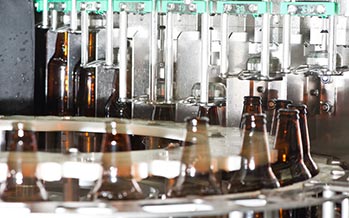
Beer brewing equipment should include pressure/vacuum relief, temperature and level protection, emergency stops, machine guards, electrical protection, CO₂ detection, safe CIP controls, secure vessel access, and lockout points. Pressure-rated tanks need protection matched to their design pressure, while CO₂ monitoring is important because NIOSH lists 40,000 ppm as the revised IDLH level. Equipment should also support energy isolation, safe drainage, suitable guarding, alarm interlocks, and documented inspection procedures. In the United States, OSHA rules address hazardous energy and machine guarding; in the UK, pressure systems are covered by PSSR requirements.
Beer brewing equipment brings several different hazards into one production area: hot wort, steam, pressurized tanks, carbon dioxide, pumps, agitators, electrical power, cleaning chemicals, and elevated work platforms. A brewery may therefore need several independent safety functions rather than one general emergency device. The equipment specification should identify the hazard, the operating condition, the protective device, and the safe state created when that device operates. Safety functions should be designed into the equipment before fabrication, not added after installation.
Pressure protection deserves early attention because fermentation, carbonation, and transfer systems can store substantial mechanical energy. A bright beer tank or unitank should have pressure-relief equipment sized for credible overpressure conditions, with pressure indication and suitable isolation arrangements. Vacuum protection can also be required during cooling, draining, or rapid liquid removal. HSE guidance states that pressure-system protective devices, vessels, and relevant pipework should be covered by appropriate examination arrangements; a 2026 HSE enforcement notice involving a UK brewery specifically concerned a bright beer vessel and its examination scheme.
Pressure protection should be checked as a complete system rather than as a tank accessory: vessel rating, valve set pressure, connected piping, temperature, gas supply, and foreseeable fault conditions all need to be compatible.
Temperature protection covers more than recipe control. Brew kettles, hot-liquor tanks, steam jackets, and CIP circuits can expose operators to liquids well above 60°C. Independent high-temperature cutouts can reduce the chance of continued heating after a sensor or controller fault. Electric heating equipment should also have suitable low-level protection because energized elements without adequate liquid coverage can overheat. Adding two independent temperature measurements can provide a useful comparison where process temperature is safety-relevant.
Level and flow sensing should work together with pumps and heaters. A controller can stop a pump when the source vessel reaches a low level, while a flow switch can confirm that liquid is actually moving after a pump starts. A positive-displacement pump may need a pressure-relief path because a closed discharge can raise pressure rapidly. Interlocks should be tested under fault conditions, not only during normal production. A commissioning test covering 100% of defined safety trips provides a clear acceptance record.
Mechanical guarding applies to malt mills, augers, conveyors, agitators, couplings, belts, chains, and other rotating equipment. OSHA's machine-guarding requirements call for protection from hazards such as rotating parts and points of operation, and the guard must not create another hazard. An access door that exposes a moving agitator can use an interlock that removes the drive command when opened. Guards should also remain practical for cleaning, because equipment that requires frequent removal of safety components can create poor maintenance habits.
Emergency-stop devices should be positioned where operators can reach them without moving toward the hazard. The required response depends on the equipment: one system may need to stop a pump, another may need to disable heating, while a packaging line may need controlled stopping rather than immediate power removal. OSHA's machine-safety guidance also identifies accessible emergency stops and main disconnects as appropriate protective measures for machinery. An emergency stop should not create an automatic restart when the button is reset.
Electrical systems in breweries face water, foam, steam, condensation, alkaline cleaners, acidic cleaners, and repeated washdown. Motors, sensors, junction boxes, connectors, and control panels therefore need enclosure and installation specifications suited to the actual environment. Grounding, disconnects, overcurrent protection, cable routing, and circuit identification should be documented. Where a brewery uses washdown procedures several times per week, equipment selection should account for repeated moisture exposure rather than a dry indoor installation.
Carbon dioxide deserves separate treatment because fermentation and carbonation can release large quantities of gas without visible warning. NIOSH lists a revised IDLH concentration of 40,000 ppm CO₂; human exposure data cited by NIOSH include effects at 50,000 ppm for 30 minutes and unconsciousness after exposure to 70,000–100,000 ppm for several minutes. A brewery should therefore consider fixed CO₂ monitors in areas where gas could accumulate, together with mechanical ventilation and clearly defined alarm responses.
CO₂ safety should not depend on smell or operator awareness. The gas is colorless, and a detector can provide an alarm before a local atmosphere reaches the NIOSH IDLH value of 40,000 ppm.
CIP equipment introduces another group of hazards: caustic and acidic solutions, elevated temperatures, pump pressure, and chemical residues. Automated chemical dosing can reduce direct handling of concentrated chemicals, while temperature, concentration, flow, and tank-level sensors can confirm whether a cleaning cycle is operating within its programmed range. Valve sequencing also matters. A CIP system should not allow a worker to disconnect a hose or open an access point while a line remains hot, pressurized, or filled with cleaning solution.
Vessel access requires similar controls. Manways, sample ports, sight glasses, and fittings should have pressure and temperature ratings appropriate to the process. A large tank may operate at only a few bar, but a failure at pressure can release liquid and gas quickly. UK HSE pressure-system guidance states that pressure equipment should operate within defined safe operating limits and that examinations should be completed by a competent person where required. A 2026 UK enforcement case shows that pressure-vessel inspection arrangements remain an active regulatory issue in brewing.
Safe access platforms are often overlooked when equipment is specified around tank volume alone. Operators may need to climb several meters to inspect a lid, add hops, sample wort, or operate valves. Platforms need suitable guardrails, stable stairs or ladders, slip-resistant surfaces, and drainage. If a brewery uses elevated work areas every production day, their design should account for repeated wet cleaning rather than occasional maintenance access.
Lockout and energy isolation become important whenever equipment is cleaned, unclogged, inspected, or repaired. OSHA's 29 CFR 1910.147 requires an energy-control program where unexpected startup or stored energy could cause injury, including procedures for shutdown, isolation, stored-energy release, and verification. OSHA's guidance specifically includes residual air, gas, steam, and water pressure among stored-energy sources that may need to be dissipated or restrained.
A brewery equipment package should therefore provide clearly identified disconnects and isolation points for electrical power, steam, compressed air, CO₂, hot water, hydraulic systems, and pressurized product lines where applicable. A screen showing “OFF” is not the same as physical isolation. During commissioning, each isolation point should be identified against the P&ID, tested, labeled, and included in maintenance procedures. For a system with 20 or more isolation points, a controlled register can reduce confusion during shutdown work.
Control software should also handle sensor failure rather than assuming every signal is valid. A failed temperature probe, pressure transmitter, level switch, or valve-position signal should produce an alarm or move the process to an appropriate safe condition. Critical interlocks can be designed so that loss of a required permissive prevents the next step from starting. Test records should document the expected trip condition, actual response, reset behavior, and restart requirement for each safety function.
For breweries comparing equipment suppliers, documentation can reveal more about safety design than a product brochure. A specification request can ask for vessel design pressure, relief-device data, electrical drawings, I/O lists, interlock descriptions, emergency-stop architecture, material certificates, inspection records, operating limits, and maintenance instructions. Buyers evaluating hgmc brewing or another equipment supplier can use the same checklist so safety features are compared on documented specifications rather than marketing descriptions.
| Equipment area | Useful safety provision | What to verify |
|---|---|---|
| Fermenter / bright tank | Pressure and vacuum relief | Set points, vessel rating, discharge path |
| Brew kettle | High-temperature cutoff | Independent sensor and shutdown test |
| Electric heater | Low-level interlock | Heater disabled below safe level |
| Pump system | Dry-run and pressure protection | Flow, pressure, relief path |
| Agitator / mill | Guarding and interlock | Access cannot expose moving parts |
| CO₂ area | Gas detection and ventilation | Alarm location, ventilation response |
| CIP skid | Chemical and pressure controls | Valve sequence, temperature, chemical handling |
| Electrical panel | Isolation and environmental protection | Enclosure rating, grounding, disconnect |
| Entire system | Lockout points | Isolation, stored-energy release, verification |
A useful supplier review can score each safety function as installed, documented, tested, or missing, rather than treating “safety system included” as a single specification. For example, a pressure relief valve that is physically installed but lacks documented set pressure or inspection records should not be treated the same as a fully documented and tested protection system. A 2026 procurement review can also check whether the supplied manuals match the final installed configuration, especially after field changes.
The final equipment choice should account for the brewery's process, vessel pressures, heating method, cleaning chemistry, utilities, staffing pattern, building layout, and jurisdiction. US installations may need to address OSHA requirements, while UK facilities may fall under pressure-system requirements such as PSSR. Other jurisdictions can apply different codes and inspection rules.